The FIFA World Cup is more than just a football tournament; it is a global phenomenon that etches itself into the collective memory of billions. Every four years, nations unite under a common banner, and heroes are born on the grandest stage of all. While every tournament produces its share of drama, some matches transcend sport entirely. They become historical touchstones—defining moments of joy, despair, genius, and controversy. These are the games we discuss decades later, the ones that highlight why football is known as “the beautiful game.”
This article delves into some of the most historic World Cup matches ever played, exploring the narratives, the iconic moments, and the lasting legacy that cemented their place in footballing folklore.
Table of Contents
The Miracle of Bern: West Germany vs. Hungary (1954)
Source: TheGuardian: World Cup stunning moments: the Miracle of Bern
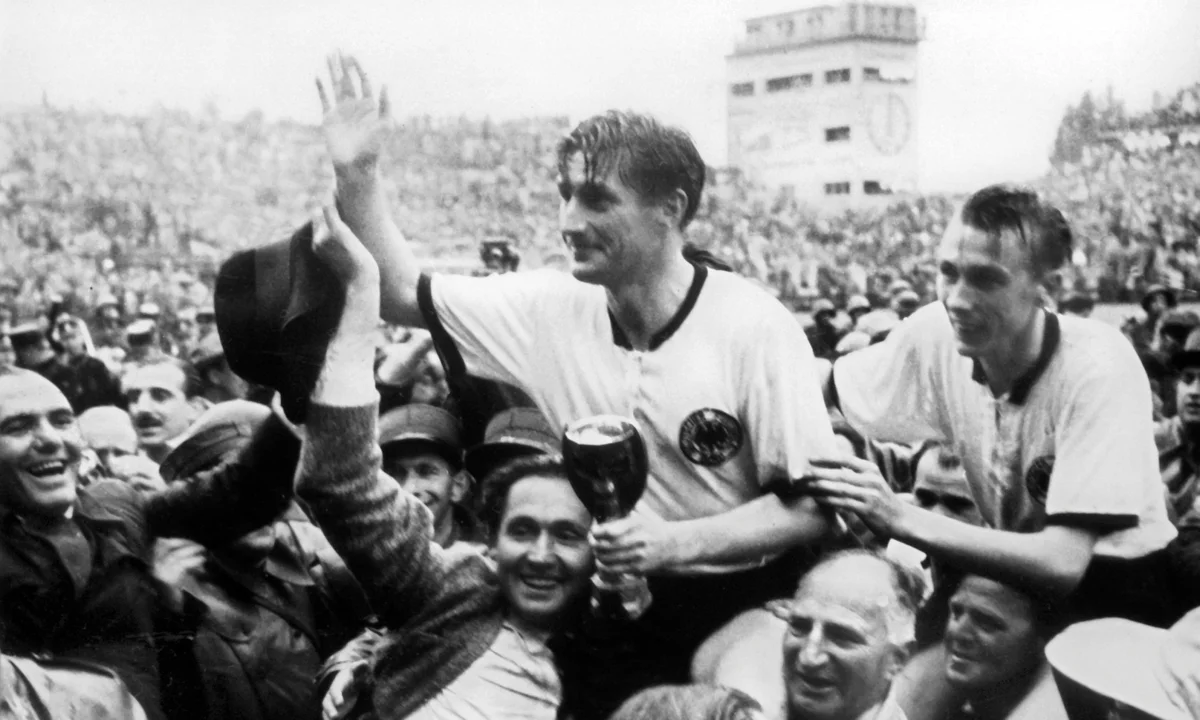
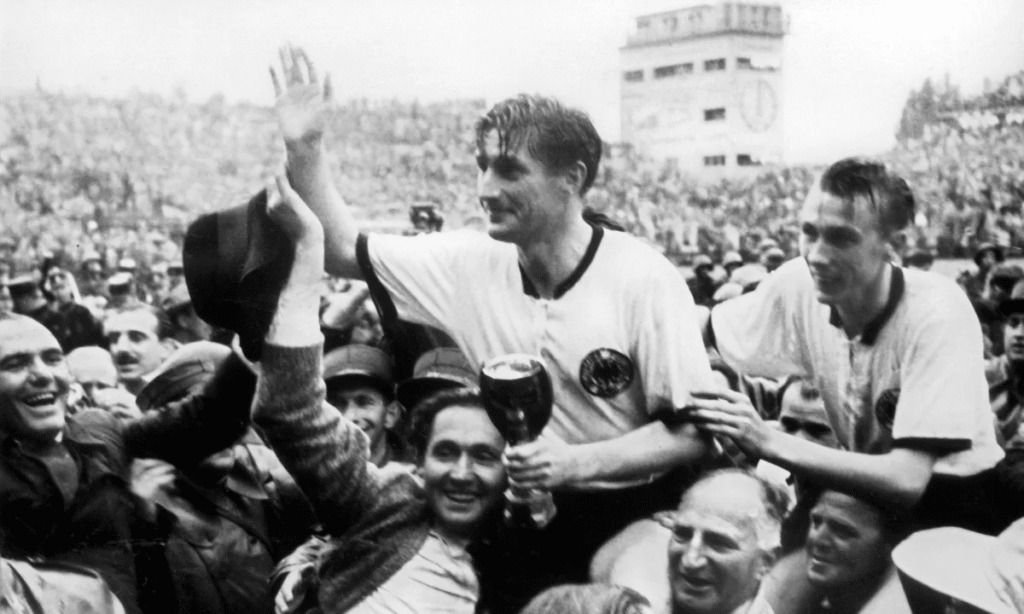
To understand the significance of the 1954 World Cup Final, one must understand the context. The Hungarian national team, known as the “Magical Magyars,” was widely considered the greatest football team on the planet. Led by the legendary Ferenc Puskás, they were unbeaten for four years and had demolished West Germany 8-3 in the group stage of the very same tournament. They were the overwhelming favorites to lift the trophy.
The final, played in heavy rain in Bern, Switzerland, started as predicted. Hungary raced to a 2-0 lead within eight minutes, and it seemed another rout was on the cards. But something shifted. West Germany, a team rebuilding from the ashes of World War II, displayed immense resilience. They equalized before halftime, stunning the Hungarians and the watching world.
The decisive moment came in the 84th minute. West German forward Helmut Rahn pounced on a loose ball in the penalty area and fired a shot into the bottom corner. The stadium erupted. West Germany, the massive underdog, won 3-2. This victory, later dubbed “The Miracle of Bern,” was about more than football. It is seen by many historians as a pivotal moment in post-war German history, instilling a sense of national pride and optimism that helped fuel the country’s economic miracle. It remains one of the greatest upsets in World Cup history.
A Ghost Goal and a Hat-Trick: England vs. West Germany (1966)
Source: TheGuardian: World Cup final 1966: England v West Germany – as it happened
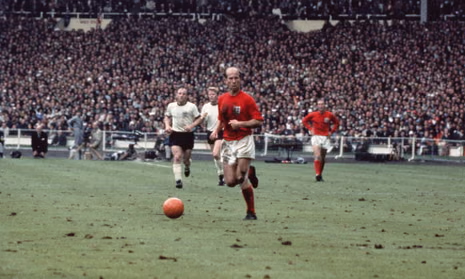
For England, the 1966 World Cup Final remains the pinnacle of their footballing history. As hosts, the pressure was immense, and their opponents, West Germany, were a formidable force. The final at Wembley Stadium was a tense, dramatic affair that ended level 2-2 after extra time seemed a certainty.
With the score tied at 2-2 in the 101st minute, England striker Geoff Hurst received the ball inside the penalty area and unleashed a fierce strike. The ball hit the underside of the crossbar, bounced down, and was cleared. The Swiss referee, after consulting with his linesman, awarded the goal. To this day, debates rage about whether the ball fully crossed the line. Television footage is inconclusive, but for the English, it was a legitimate goal. For the Germans, it was a “Wembley-Goal”—a ghost goal.
This moment gave England a crucial 3-2 lead. In the closing seconds of the match, with German players pushing forward in desperation, Hurst broke away and scored again, completing a hat-trick and sealing a 4-2 victory. The match is historic for England’s sole World Cup triumph, the controversy of the ghost goal, and Hurst’s unique feat—a hat-trick in a World Cup final that has never been repeated.
The Game of the Century: Italy vs. West Germany (1970)

Source: TheseFootballTimes: Partido del Siglo: the greatest 30 minutes in World Cup history
Some matches are historic not for their result or controversy, but for the sheer, unadulterated drama they produce. The 1970 semi-final between Italy and West Germany is arguably the greatest example of this, earning the moniker “The Game of the Century.”
Italy took an early lead but had to play most of the match with ten men after their star defender, Giacinto Facchetti, was forced to stay on with a broken arm in an era with no substitutions. West Germany equalized in the last minute of normal time through Karl-Heinz Schnellinger, sending the game into extra time.
What followed was an astonishing period of football. In a 10-minute spell during extra time, five goals were scored. Gerd Müller put West Germany ahead, but Italy responded almost immediately through Tarcisio Burgnich. Then, a moment of genius from Luigi Riva put Italy back in front, only for Müller to score again and level the match at 3-3. Just when it seemed a penalty shootout was inevitable, Italian defender Gianni Rivera capitalized on a defensive error to score the winner. The final score was 4-3 to Italy. The match left players and spectators utterly exhausted, and it remains the benchmark for thrilling, back-and-forth World Cup encounters.
The Hand of God and the Goal of the Century: Argentina vs. England (1986)
No single player has ever dominated a World Cup match quite like Diego Maradona did in the 1986 quarter-final against England. The context was loaded, with memories of the Falklands War just four years old adding a fierce political undercurrent to an already heated football rivalry.
Just four minutes into the second half, the first historic moment occurred. Maradona challenged England goalkeeper Peter Shilton for a high ball and punched it into the net. The goal was allowed to stand. Maradona later famously described it as “a little with the head of Maradona and a little with the hand of God.” The Hand of God goal was an act of audacious cunning that infuriated England and delighted Argentina.
If the first goal was infamous, the second was divine. Just four minutes later, Maradona received the ball in his own half. He embarked on a mesmerizing 60-yard dribble, gliding past five England players—twice rounding the same man—before calmly slotting the ball past Shilton. It was voted the “Goal of the Century” in a 2002 FIFA poll. In the space of ten minutes, Maradona had produced the most notorious and the most sublime goals in World Cup history, single-handedly defining his nation’s 2-1 victory and his own legendary, controversial status.
A Tragic Swan Song: Italy vs. France (2006)
Source: TANZANIASPORTS: The grudge match: France v Italy
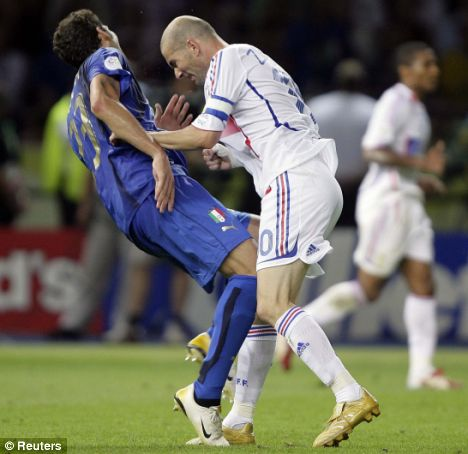
The 2006 World Cup Final was a clash of titans: Italy, the masters of tactical defense, versus France, led by the enigmatic genius Zinedine Zidane, playing his final professional match. The game was a tense, tactical battle. Zidane had given France the lead with a audacious chipped penalty early on, but Italy responded through a Marco Materazzi header. The score remained 1-1 after extra time.
Then, in the 110th minute, the most shocking moment in World Cup final history unfolded. In an unremarkable piece of play, Materazzi and Zidane exchanged words as they walked up the pitch. Suddenly, Zidane turned, reared back, and delivered a brutal headbutt to Materazzi’s chest. The Italian crumpled to the ground. The referee, after consulting with his assistant, showed Zidane a red card.
It was a stunning, tragic end to the career of one of football’s greatest ever players. A man who had guided his team to the brink of a second World Cup trophy had his swan song ruined by a moment of pure rage. Italy went on to win the penalty shootout, but the match is remembered not for the winners, but for Zidane’s inexplicable act of violence. It remains a symbol of the immense pressure and raw emotion that can bubble to the surface on the world’s biggest stage.
The Humiliation of a Host: Brazil vs. Germany (2014)
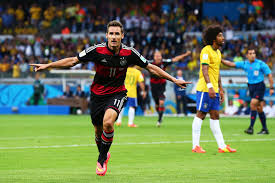
Source: The New Yorks Time: World Cup 2014: Germany Defeats Brazil, 7-1
When Brazil and Germany met in the 2014 semi-final, the hosts were firm favorites. Playing on home soil, a nation steeped in footballing pride expected a sixth star to be added to their famous yellow jersey. What transpired was the single most shocking result in World Cup history, an event known simply as “7-1.”
The nightmare began in the 11th minute when Thomas Müller scored for Germany. Before Brazil could recover, Miroslav Klose scored, and then the floodgates opened. In a brutal, six-minute span either side of halftime, Germany scored four goals, leaving the Brazilian players, fans, and the entire nation in a state of catatonic shock. Players on the pitch looked lost, tears streaming down their faces. The famous Maracanã stadium, once a fortress, was a scene of utter despair.
The final score of 7-1 was unprecedented in World Cup semi-finals. It was more than a defeat; it was a national humiliation that exposed deep-seated frailties in the Brazilian team and shattered the country’s footballing psyche. For Germany, it was a statement of ruthless efficiency and dominance, a performance that paved the way for their eventual World Cup triumph. This match is historic not for a moment of individual brilliance, but for the sheer scale of the collapse and its profound cultural impact.
The Enduring Legacy of Football’s Greatest Stage
These matches, from miracles to tragedies, are the pillars of the World Cup’s legacy. They are stories passed down through generations, embodying the full spectrum of human emotion. They remind us that football is not just about tactics and skill; it’s about history, national identity, and the moments that define us. Each tournament offers the promise of a new chapter, a new match that will join this illustrious list of historic encounters, ensuring that the magic of the World Cup will continue to captivate the world for decades to come.
Article Resources:
Related posts
 Fan Experience
3 Reasons Why Mbappé Won’t Surpass Zidane Ahead of World Cup 2026
 Fan Experience