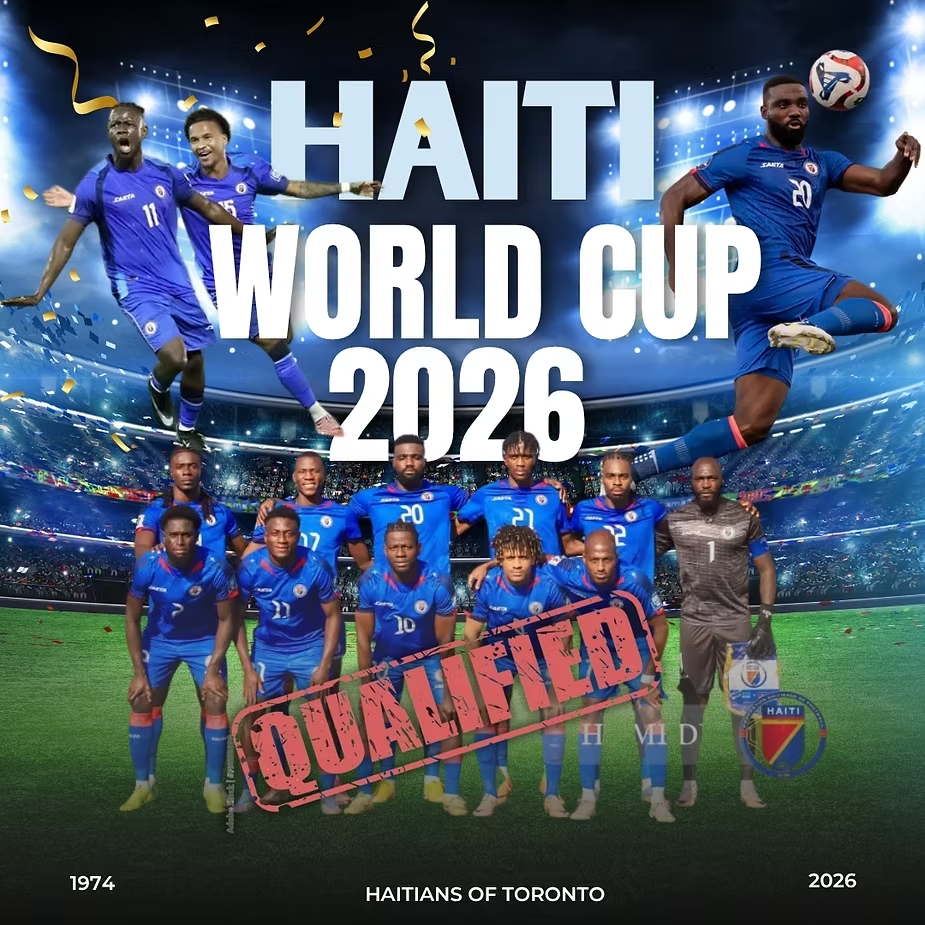
The Haiti World Cup 2026 dream is more alive than ever. For the Haiti national team, affectionately known as Les Grenadiers, the hope of World Cup glory has been a flickering candle in the wind for half a century. However, the upcoming 2026 FIFA World Cup presents a unique and unprecedented opportunity. With the tournament expanding to 48 teams, the path to qualification, while still treacherous, is wider than ever before. This has ignited a newfound sense of hope and ambition across the Haitian football landscape.
A Glimpse into History: The Sole World Cup Appearance in 1974
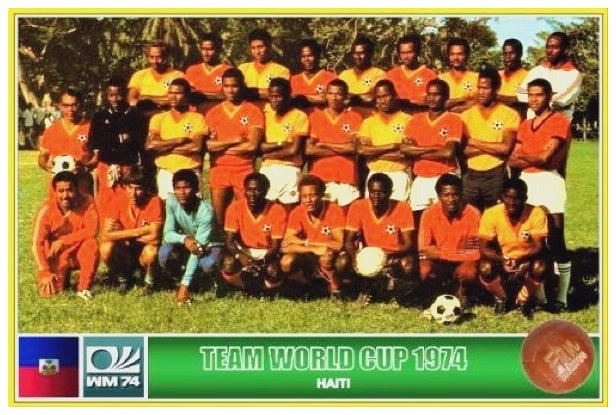
Source : lunionsuite.com Vintage Haiti: Team World Cup 1974
To understand the magnitude of the current moment, one must look back to Haiti’s one and only World Cup appearance. In 1974, under the leadership of coach Antoine Tassy, Les Grenadiers qualified for the tournament in West Germany. It was a monumental achievement for a Caribbean nation, placing them among the world’s football elite.
The tournament was a baptism by fire. Drawn into a group with footballing giants Italy, Argentina, and Poland, Haiti struggled against the highest level of competition. They lost all three matches, but they etched their name into World Cup history with a moment of pure magic. In their opener against two-time world champions Italy, striker Emmanuel Sanon scored a historic goal, breaking the legendary Dino Zoff’s record of 1,142 minutes without conceding an international goal. That single strike against the eventual tournament winners remains a source of immense national pride, a symbol that Haiti can compete with the best, even on a difficult day.
Since that legendary summer, World Cup qualification has remained an elusive prize. Haiti has come close on several occasions, reaching the final round of CONCACAF qualifying in the 2000s and 2010s, but the final hurdle always proved too high. The memory of 1974 serves as both inspiration and a heavy burden for the current generation.
The Current Squad: Haiti’s “Golden Generation”?
The term “Golden Generation” is often bestowed upon groups of exceptionally talented players who emerge around the same time. For Haiti, the current squad arguably fits this description. Spearheaded by a blend of experienced veterans playing in Europe’s top leagues and exciting young talents, this team possesses more technical quality and depth than any Haitian side in recent memory.
The core of this group was instrumental in Haiti’s impressive run to the quarter-finals of the 2023 CONCACAF Gold Cup, where they pushed eventual champions Mexico to the limit in a thrilling 2-1 defeat. That performance was a statement: Les Grenadiers are no longer just participants; they are genuine contenders within the region.
Key Players to Watch on Haiti World Cup 2026
To succeed in the grueling qualifying campaign, Haiti will rely heavily on its stars. Here are some of the key figures who will define their journey:
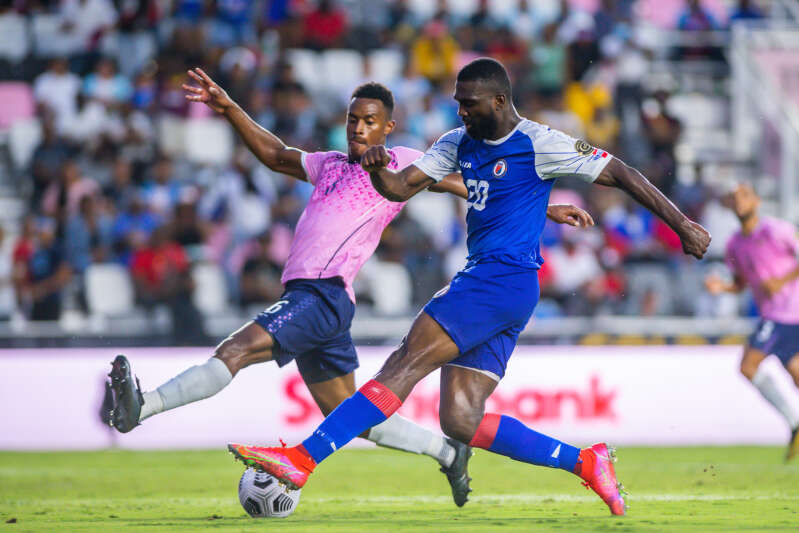
Source : royalgazette.com Prolific Frantzdy Pierrot one to watch for Haiti
- Frantzdy Pierrot: The powerful striker currently playing in Israel’s Liga Leumit is the focal point of Haiti’s attack. A physical presence with a keen eye for goal, Pierrot is the man relied upon to convert chances into crucial goals. His club experience and hold-up play are vital for the team’s offensive structure.
- Duckens Nazon: A veteran forward with a wealth of experience across various European leagues, including stints in Ligue 1 and the Scottish Premiership. Nazon brings pace, trickery, and a big-game temperament. He has a knack for scoring important goals and provides leadership on and off the pitch.
- Bryan Alcéus: The midfield engine. Playing his club football in Greece, Alcéus is the creative heartbeat of the team. His vision, passing range, and ability to control the tempo of the game are critical. He is the link between the defense and the attack, the player who makes Les Grenadiers tick.
- Steeve Jules: The young and dynamic midfielder is a symbol of Haiti’s burgeoning talent. His energy, tenacity, and box-to-box capabilities add a different dimension to the midfield. Jules represents the exciting future of Haitian football.
- Ricardo Ade: A commanding presence in defense, Ade is crucial for organizing the backline. A solid and reliable defender, his ability to win aerial duels and make timely tackles will be tested against the region’s best attackers.
The Mastermind Behind the Mission: Coach Duke Michel’s Vision

Source : soccereastafrica.com Haiti Qualifies for 2026 FIFA World Cup Under Former Harambee Stars Coach Sebastien Migne
At the helm of this ambitious project is Haitian coach Duke Michel. Appointed in 2021, Michel has instilled a new sense of discipline, tactical organization, and belief within the squad. His philosophy is pragmatic yet effective: build a solid defensive foundation and utilize the pace and technical skill of his attackers to hit opponents on the counter-attack.
Michel’s man-management has also been key. He has successfully blended the experienced core with the emerging young talents, creating a cohesive and hungry unit. He understands the weight of national expectation but has managed to shield his players from excessive pressure, fostering an environment where they can express their talent freely. His leadership will be tested over the next two years, but his tactical acumen and deep understanding of the Haitian football psyche make him the ideal man for the job.
Navigating the CONCACAF Gauntlet: The Road to 2026
The Confederation of North, Central America, and Caribbean Association Football (CONCACAF) is a notoriously competitive region. The 2026 World Cup qualification format reflects this, providing a multi-layered and arduous path. The expansion to three direct slots and two inter-confederation playoff spots for CONCACAF teams is the game-changer for Haiti.
The qualification process is structured as follows:
- Round One: The four lowest-ranked teams face off in two home-and-away ties. The two winners advance.
- Round Two: The two winners from Round One join 28 other teams, ranked 5th through 29th in the region. These 30 teams are drawn into six groups of five. The six group winners advance.
- Round Three (The Final Hexagonal/Octagonal): The six group winners from Round Two join the top three seeds (Mexico, USA, Costa Rica) and two other top-ranked teams (Canada and Panama). These 12 teams are divided into two groups of six. The top three teams from each group qualify directly for the World Cup 2026. The two fourth-place teams from each group will advance to a single inter-confederation playoff tournament.
For Haiti, seeded to enter in Round Two, the primary challenge is to finish in the top two of their five-team group. Given their current talent pool, they will be heavy favorites to advance. The final round is where the true test begins. Facing giants like the USA and Mexico is daunting, but competing for a top-three spot in a group alongside teams like Jamaica, Honduras, or El Salvador is a realistic, albeit extremely difficult, goal.
Challenges and Obstacles on the Path to the World Cup
The path is far from guaranteed. Haiti faces several significant challenges:
- Depth of Squad: While the starting XI is strong, injuries or suspensions to key players like Pierrot or Alcéus could be devastating. The depth of the squad is not yet on par with the region’s top teams.
- Consistency: The Haitian team has shown flashes of brilliance but has struggled with consistency, especially in away games. Winning tough matches on the road in places like Panama, Kingston, or San Salvador is a must for qualification.
- Competitive Landscape: CONCACAF is stronger than ever. Teams like Canada, Panama, and Jamaica have also built strong, talented squads. The fight for the crucial spots will be fierce.
- Internal Factors: Like many national federations, the Haitian Football Federation (FHF) has faced its share of instability. Off-field issues can sometimes impact on-field performance, making the team’s journey even more precarious.
Conclusion: A Dream Within Reach
The road to the 2026 World Cup for Haiti is paved with both unprecedented opportunity and formidable challenges. The expanded format is the wind in their sails, but they must navigate a stormy sea of regional rivals. Success will hinge on the continued development of their “Golden Generation,” the tactical genius of Coach Duke Michel, and the unwavering passion of their supporters.
Qualification for the World Cup 2026 would be more than just a sporting achievement for Haiti; it would be a moment of profound national unity and joy, a source of inspiration for millions. The flame that was lit in 1974 has been kept alive by generations of fans. Now, 50 years later, Les Grenadiers have their best chance in a lifetime to turn that flickering candle into a roaring fire on the world stage. The journey will be long and hard, but for Haitian football, the dream is finally, tantalizingly, within reach.
Article Resources:
- FIFA Official Website: https://www.fifa.com/fifaplus/en
- CONCACAF Official Website: https://www.concacaf.com/
- Haitian Football Federation (FHF): https://fhf.ht/
Related posts
 World Cup Qualifiers
Saudi Arabia World Cup 2026: The Green Falcons’ Quest for Glory
 Fan Experience