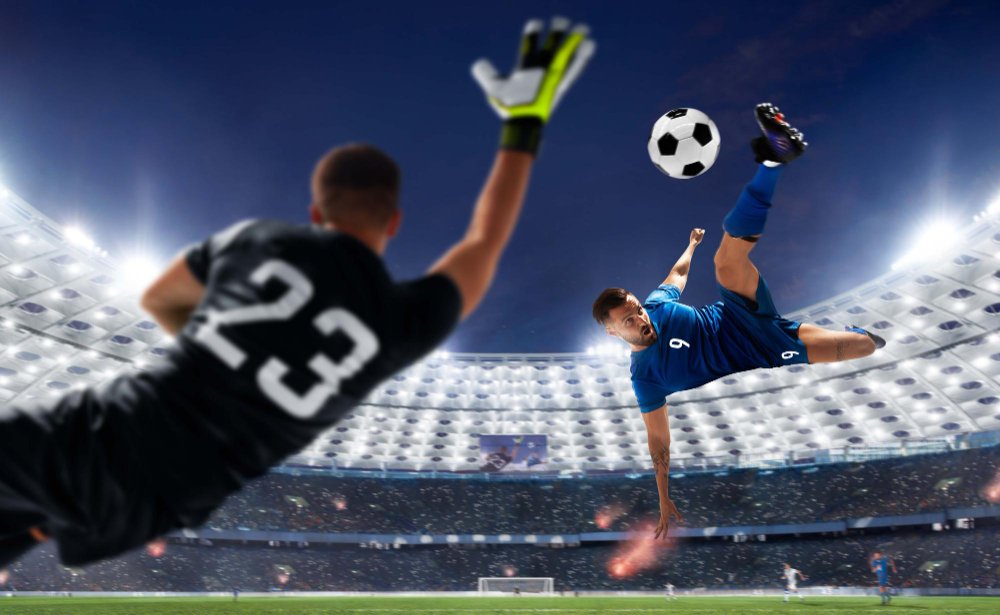
In football, penalty shootouts tend to be some dramatic and nerve-wracking moments that can make or change a single game in a second. They are spectacles for fans, but for players – they are battles of skill and nerve. It may look like your ordinary shootout, but in truth, it requires a lot of mental strength and the general need to prepare.
From famous examples like England penalty shootouts all the way back to origins, this article will explain to you how such a penalty in football works. Plus, why it matters and why they are and (can be) such unforgettable fixtures in the upcoming FIFA World Cup 2026.
Penalty Shootouts: Origins, Rules, and Pressure
When you really look back, penalty shootouts were never once part of football. So, when did penalty shootouts start? The answer happens to be in early 1970s – it started to replace the usual coin toss and replay that used to unfairly decide match results. Now, the football penalty shootout is a general standard of determining which team wins, especially when a game is tied after extra time has passed.
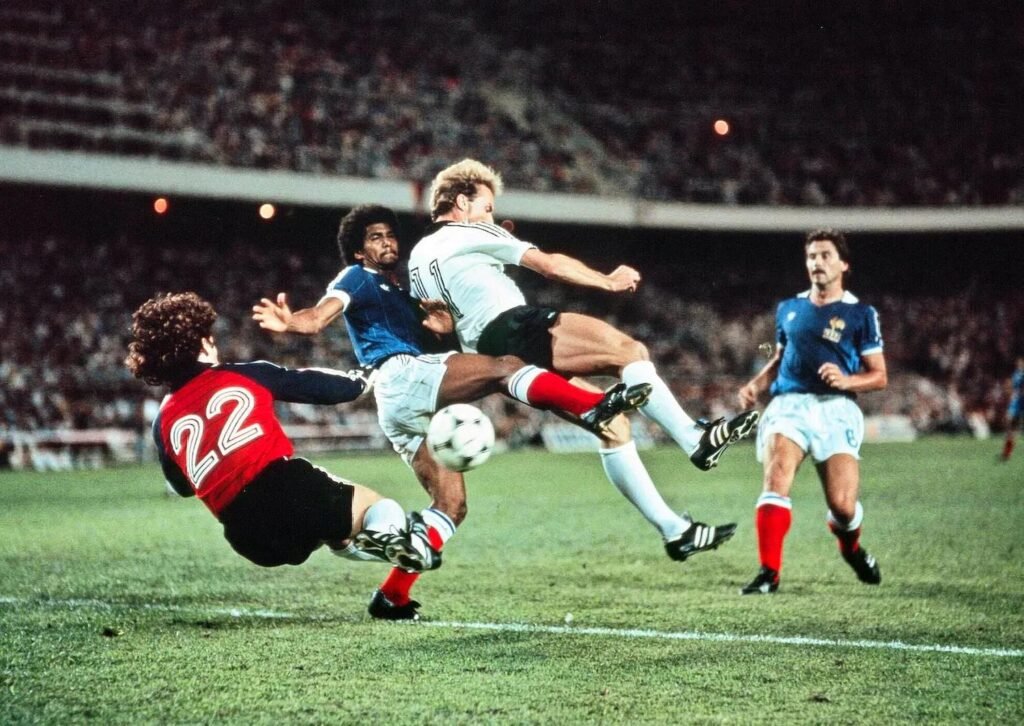
It wasn’t until 1982 when the first ever penalty shootout occurred in a World Cup. Particularly during the semi-final match in the 1982 World Cup in Spain between France and West Germany. West Germany has succeeded in winning 5-4 on penalties after having a 3-3 draw.
In its essence, a penalty shootout involves both teams taking five shots each from the penalty spot. If the score remains tied still, sudden death kicks may continue until one team outpoints the other. Though the rules may seem simple, the psychology and execution behind it is a lot more complex than you may think.
SEE ALSO: Football Tactics Explained: Pressing, Possession, and Transitions
The Mental Battle Behind Penalty Shootouts
There is a lot of pressure in football, and, in turn, it changes everything for the game itself. A penalty during open play already tests the player’s composure. But imagine during penalty shootouts: here, the stakes are much higher and more dramatic.
Many sports psychology research has averaged that conversion rates tend to drop by 5-10% in such shootout moments, as opposed to regular penalties. In fact, according to a study by Vollmer, Schoch, and Brandes (2024), shootout conversation rates tend to be lower and may contribute to even worse performance for shooters. Imagine the anxiety alone, pressure from the crowd, and fatigue – it overall makes what looks like a simple kick suddenly feel very impossible.
Famous Examples of Pressure
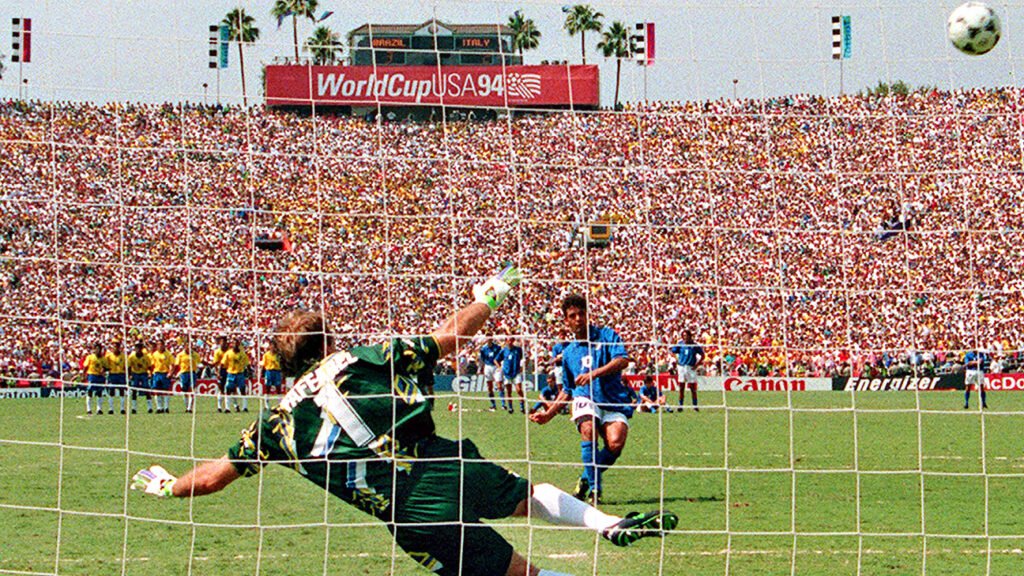
England, for example, has been long associated with heartbreak with a few England penalty shootouts. Roberto Baggio, in particular, during the 1994 World Cup for Italy also told the world how even the greats can crumble under the shootout pressure. They’ve become part of football folklore now, simply remembered as much as the goals scored in open play.
The Key Psychological Factors in Penalty Shootouts
Confidence and Mental Toughness
Everything in a football penalty shootout is confidence. Visualizing success, being process-oriented rather than result-oriented, and believing in their own routines, players are statistically more likely to score. Mental toughness enables the player to shut out distractions and focus only on execution.
Routines and Rituals
Rituals of adjusting of socks or profound breathing, or stutter-step run-ups, are not superstition, but are organisation. It has been found that players who have routines during penalty shootouts perform better than improvising players. The simplicity of Lionel Messi is opposite to the complex run-ups performed by Marcus Rashford, yet both of them are on the basis of practiced and repeat patterns.
SEE ALSO: FIFA World Cup 2026 Tickets: How to Buy Safely
The Goalkeeper’s Advantage
The penalty shootout on the football is special, as far as goalkeepers are concerned. There are few expectations placed on them and this makes them adopt the hero mindset. Takers are often put off by psychological tricks like delaying the kick or even body language to scare. The performances of Emiliano Martínez at the Copa América gave a demonstration of how goalkeepers can take control both technically and psychologically.
England Penalty Shootouts: From Heartbreak to Redemption
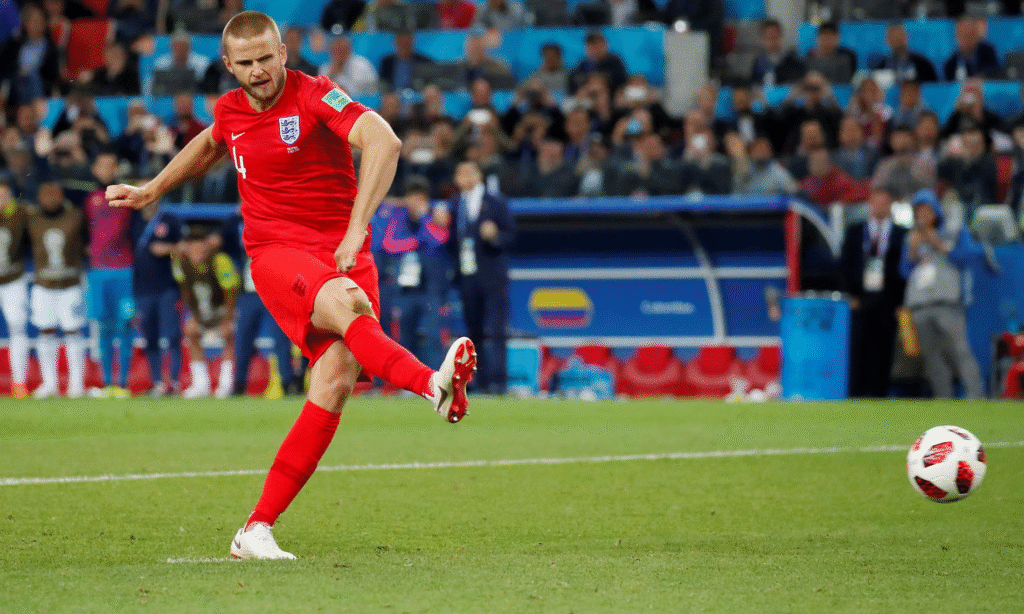
For decades, England penalty shootouts, in particular, can be known for their failures. In fact, the national team of England had once lost six of seven shootouts before 2018. This created such a cultural take of expected heartbreak, but it was eventually turned around by Gareth Southgate.
When Gareth hired sports psychologists and drilled practice routines on his players, England soon beat Colombia in penalties in the 2018 World Cup. This was a major turning point for the English national football team, having overcome past trauma on such fronts. To this day, England penalty shootouts are no longer curses, but rather, major opportunities for better success.
When Did Penalty Shootouts Start and How Have They Changed?
Such a football system was introduced, officially, in 1980 – which replaced unfair methods such as coin tosses. Since then, a penalty shootout can evidently decide countless high-profile matches like Champions Leagues and even World Cups.
Over many years, VAR monitoring has change the way the game works. VAR can now monitor goalkeepers to ensure they’re keeping one foot on the line, making it difficult to cheat now during shootouts. Such an evolution just shows how football’s constant attempt to keep things fair and decisive for shootouts, and other aspects of the game in general.
SEE ALSO: How FIFA World Cup Qualifiers Works (Confeds, Pots, Playoffs)
Strategies for Success in Penalty Shootouts
Practicing Under Pressure
Teams now train under high-pressure conditions. Noise of crowds, long walk-ups, and referee signals are practiced to train players psychologically.
Data and Analysis
Analytics are embraced in modern football. To anticipate patterns, clubs research thousands of penalties. And the pressure is not just on the attacker. Goalkeepers are required to practice and do their research for such penalty shootouts.
In 2008, in fact, Edwin van der Sar saved a goal against Nicolas Anelka in the final of the Champions League with data analysis. Thus, it was a direct result of how goalkeepers also has to study the pressure filled shootouts.
Team Dynamics
Trust grows in a team. Penalty shootouts increase the performance of the players when they are supported. Accord and confidence are equally important as personal ability.
Why Penalty Shootouts Captivate Fans
Penalty shootouts are the most exciting spectacles in football even though critics described them as unfair. They boil down the drama of a whole match into some tense moments. It makes heroes and it makes villains and it makes fans feel long after the final whistle.
SEE ALSO: Football Stadium Do’s & Don’ts: Fan Etiquette and Safety Rules
Final Thoughts: The Psychology Behind Penalty Shootouts
Penalty shootouts will never lack the tag of broken heart and glory. They are not lotteries but well planned staged fights of psyches, preparation, and stamina. Since the beginnings of when did penalty shootouts start through notorious events such as England penalty shootouts, history demonstrates that they characterize careers as well as nations.
To players, they are the supreme challenges of composure. To the fans, they offer memorable drama. And as to football itself, penalty shootouts are the thing of beauty and brutality!
Frequently Asked Questions
How does a penalty shootout work?
A penalty shootout can only happen in a football match when the scores are nil (level) after regular time and extra time. Each team will then alternately take penalty kicks against their opposing goalkeepers. Should there be no winner after five pairs of kicks, the match will undergo “sudden death”.
How many penalties are there in a shootout?
If the initial five kicks during the shootout doesn’t have a winner, penalties will continue into “sudden death”. Here, single kicks are taken alternately between teams until one team can score more than the other team after both teams have the same number of kicks.
What are famous penalty shootouts?
- Brazil vs. Italy (1994 World Cup Final): It was the first final in World Cup history to be settled on a penalty shootout, with the star of the Italian team, Roberto Baggio, known to have missed the last penalty that brought Brazil the championship.
- Italy vs. France (2006 World Cup Final): The shootout followed a tense finale, the most memorable moment of which is the headbutt and red card of Zinedine Zidane, who was defeated by Italy and brought his fourth world cup to his nation.
- Chelsea vs. Bayern Munich (2012 Final at Champions League): In this game, Chelsea scored their initial Champions League title on penalty in the homeland of Bayern.