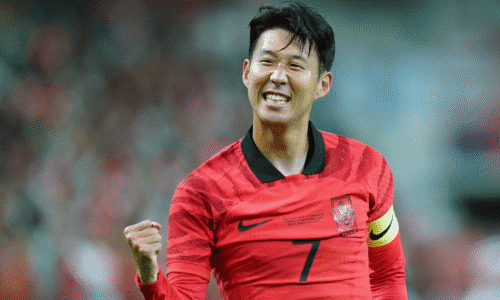
The brand new FIFA World Cup 2026 format is bound to make history with the biggest expansion in football formats yet. In fact, the next FIFA World Cup will feature 48 teams, 104 matches, and a new knockout round – all of this, to redefine how football is seen and played globally. With the next FIFA World Cup host being a triple hosting between Canada, Mexico, and the United States – anticipation is simply through the rough.
With that, we’ll explain a brief breakdown of how the new 2026 World Cup format will happen a year from now in the article below.
FIFA World Cup 2026 Format Breakdown
The FIFA World Cup 2026 format is a dramatic shift, as opposed to old versions. For the very first time, there will be 48 teams competing, compared to Qatar 2022’s total of 32 teams. Additionally, the next FIFA World Cup will also feature a fixture that makes 12 groups of 4 teams each. In this way, the top two teams, together with the eight best third-placed sides, moves to Round of 32.
But why was this done? Well, this adjustment will help bring a fresh level of competition – all on top of more participation from many countries. Contrary to the previous FIFA world cup of 64 matches, the 2026 FIFA World Cup will have 104 matches. That’s an additional 40 world-class football fixtures on the fans!
More Matches, More Drama
A new knockout round is set to happen for the next FIFA World Cup. Here, eventual champions will need to compete in eight games instead of the usual seven. The introduction of the new Round of 32 can provide fans two things. More upsets or more surprising Cinderella stories like Morocco’s surprising rise to semi-finals in Qatar 2022.
Why 12 Groups of Four?
The new 2026 World Cup format was chosen by FIFA themselves. It contained the 12-group format over the old 16 groups of three after analyzing sporting fairness and player welfare. And of course, the overall fan experience. This format also ensures that every team can play at the very least, three matches, while allowing for balanced resting periods.
How the Format Evolved Over Time

The FIFA World Cup 2026 format is actually the fourth major change in the tournament’s history. Ever since 1930, the competition has grown as needed for its current time:
- 1930–1950: 13–16 nations participated.
- 1954–1978: 16 teams competed.
- 1982–1994: Expansion to 24 teams.
- 1998–2022: 32-team format became standard.
This new FIFA World Cup format leap to 48 teams provides new opportunities for nations across many continents. Especially for those that have yet to set foot on the global stage of football.
SEE ALSO: 2026 World Cup Host Cities Ranked: The Best Experiences
Confederation Spots and Global Impact
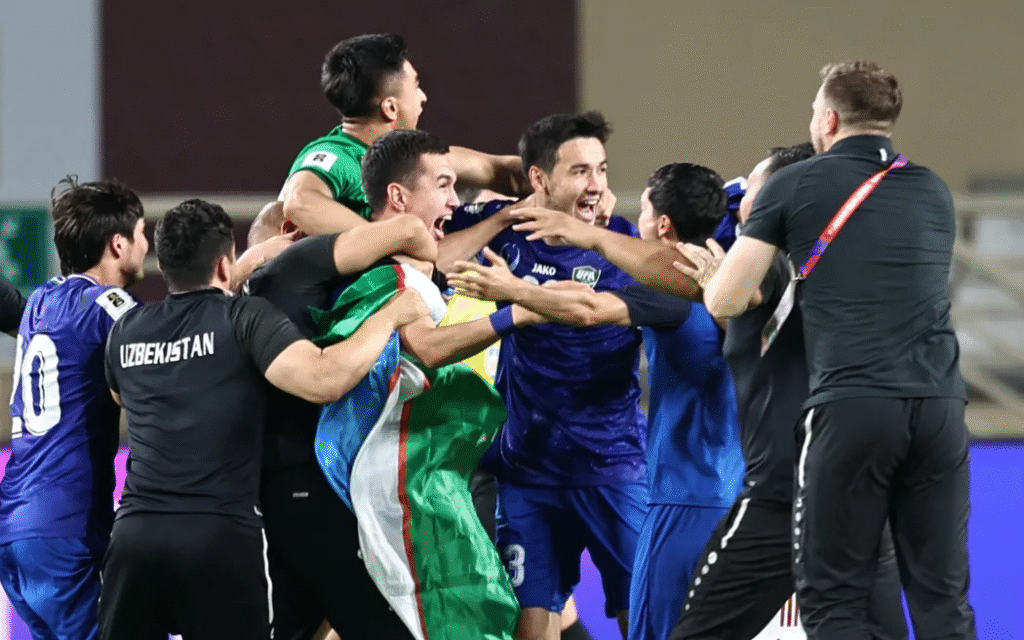
Another big change to note in the 2026 FIFA World Cup format is the sudden increase in qualifying slots. Several football confederations are given a chance to join a broader representation:
- Asia (AFC): 8 spots
- Africa (CAF): 9 spots
- North & Central America (CONCACAF): 6 spots
- Europe (UEFA): 16 spots
- South America (CONMEBOL): 6 spots
- Oceania (OFC): 1 spot
The last two spots for the 2026 FIFA World Cup, however, will be decided via a playoff tournament. This gives even more nations the chance to tell the world of their players’ talent in the next FIFA World Cup.
Tournament Duration and Schedule
The FIFA World Cup 2026 format, on top of additional teams and matches, have also extended competition days. It will now happen in 39 days, compared to Qatar 2022, which was held for less. The schedule will be as follows:
- Group Stage: June 11–27
- Round of 32: June 28–July 3
- Round of 16: July 4–7
- Quarterfinals: July 6–11
- Semifinals: July 14–15
- Third-Place Match: July 18
- Final: July 19 at MetLife Stadium in New York/New Jersey
This sort of structure shows how the next FIFA World Cup believes in their commitment to giving players rest and competition at the same time.
SEE ALSO: How FIFA World Cup Qualifiers Works (Confeds, Pots, Playoffs)
Pros of the Expanded Format
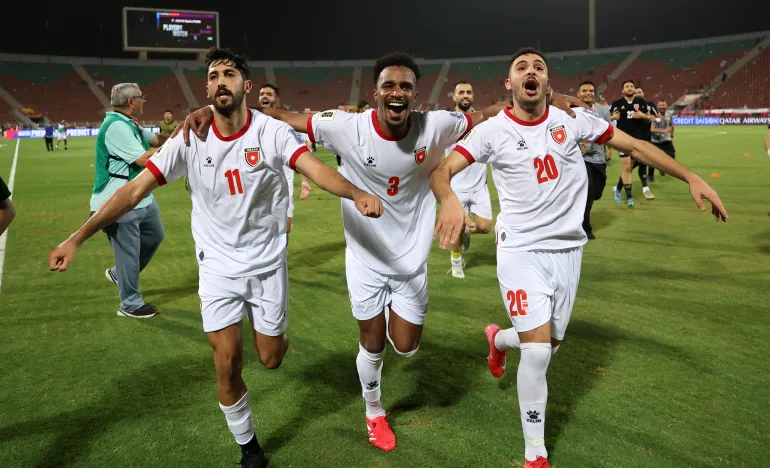
The FIFA World Cup 2026 format offers several advantages:
- Inclusion: For the first time, more teams coming from Africa, Asia, and CONCACAF will get a chance to enter the world stage of football.
- Excitement: With the addition of knockout rounds, this will give the underdogs a chance to prove themselves further.
- Growth: Smaller nations with very little exposure to global football stages can be seen. This also helps players from such nations boost their development, while increasing fan engagement from their own countrymen.
Criticisms of the Expansion
The FIFA World Cup 2026 format is not popular with everyone. Critics say the extra games add player fatigue, and injury risk, particularly to stars who already face rigor mortis club schedules. Some are concerned with unilateral group games and diminished play.
Nonetheless, FIFA still argues that the advantages of global inclusion and increased competitiveness prevail over these issues.
Final Thoughts: Why This Format Matters
Formatting the 2026 FIFA World Cup is not a numbers game only, but an extension of the rise of football throughout the world. The introduction of 48 teams and an additional knockout has brought about a tournament that has focused on inclusivity, excitement, and global popularity by FIFA.
Talk of the welfare of players, plus its quality of matches, will not stop. But the thing that goes with the FIFA World Cup 2026 format is that it’ll bring football to fans unlike anything seen before. So, it is rather ambitious, on top of everything else like having three co-hosts.
Frequently Asked Questions
What is the format for the World Cup 2026?
In the next FIFA World Cup, the format will be increased to 48 teams; hence, teams will be playing into 12 teams of four. It will have 104 matches total in 39 days. The two highest ranked teams in each group, as well as the eight highest-ranked third-place teams will move on to the Round of 32 in the first of five single-elimination knockout rounds.
How does the group stage work in the World Cup 2026?
In the new FIFA World Cup 2026 format, the teams will be divided into 12 groups of four. Each team shall play a round-robin schedule within its own groups, with three group-stage matches.
The knockout stage that follows shall be different as well. Here is how it will look:
- Top two teams of the 12 groups will automatically qualify.
- Remaining eight spots will be filled by the third-placed teams from all 12 groups, per a points system and other tiebreaker rules.
Thus, it will create a new round of 32 teams, compared to the traditional round of 16.
What teams have qualified for the World Cup 2026?
As of September 10, 2025, the following teams have qualified for FIFA World Cup 2026:
- Host nations (Auto-qualify): Canada, Mexico, United States.
- Asia: Australia, Iran, Japan, Jordan, South Korea, Uzbekistan.
- Africa: Morocco.
- CONCACAF: None yet.
- Europe: None yet.
- Oceania: New Zealand.
South America: Argentina, Brazil, Colombia, Ecuador, Paraguay, Uruguay.
Related posts
 Predictions
2026 World Cup Group Stage Predictions Upsets Dark Horses Locks
 World Cup Qualifiers