
The road to the FIFA World Cup is always a drama-filled, multi-year saga of hope, heartbreak, and national pride. But for the 2026 edition, the very map of that journey has been radically redrawn. The tournament’s expansion to an unprecedented 48-team format is more than just a number; it fundamentally alters the landscape of international football, creating a new paradigm for World Cup 2026 qualification.
For decades, nations from Asia and Africa have fought a disproportionately tough battle for a handful of slots, while South American powerhouses enjoyed a high probability of success. Now, the scales have tipped. The new structure offers a lifeline to emerging football nations and a more direct path for entire continents. But what does this actually mean for the qualification probabilities of teams across the globe?
This comprehensive analysis will break down the new allocation, explore the implications for each confederation, and decode the mathematical realities of reaching the World Cup in 2026. From the guaranteed spots for hosts to the new inter-confederation playoff, we’ll provide a clear guide to understanding the most inclusive World Cup in history.
Table of Contents
A New Era: The 48-Team World Cup Format
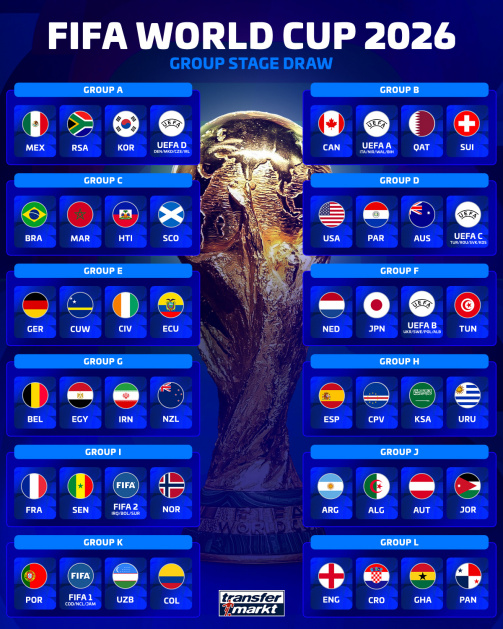
Source : World Cup 2026 draw 48 teams
Before diving into the numbers, it’s crucial to understand why this change is so monumental. The jump from 32 to 48 teams represents a 50% increase in participation. FIFA’s rationale centers on growing the game’s global reach, making the tournament more inclusive, and tapping into new commercial markets. While purists may argue it dilutes the quality, the undeniable effect is a surge in opportunity.
The 2026 tournament will be co-hosted by the United States, Canada, and Mexico. As hosts, these three nations receive automatic qualification, a significant advantage that slightly impacts the total number of slots available through the regular qualifying process. This leaves 45 spots to be contested by the rest of the world’s football associations.
The qualification process itself will be managed by FIFA’s six continental confederations:
- AFC (Asia)
- CAF (Africa)
- CONCACAF (North, Central America and Caribbean)
- CONMEBOL (South America)
- OFC (Oceania)
- UEFA (Europe)
Each confederation has been allocated a specific number of direct qualification slots, with one crucial addition: a six-team playoff tournament for the final two places.
Breaking Down the Allocation: How the Slots Are Divided
The agreed-upon slot allocation is the foundation of the new qualification probabilities. It reflects a strategic shift towards rewarding the continents with the most member associations while still respecting the footballing pedigree of traditional powerhouses.
Here is the official breakdown for the 45 available spots:
- AFC (Asia): 8 direct slots + 1 playoff slot (8.5 total)
- CAF (Africa): 9 direct slots + 1 playoff slot (9.5 total)
- CONCACAF: 3 direct slots + 1 playoff slot (3.5 total), plus 3 host nations
- CONMEBOL (South America): 6 direct slots + 1 playoff slot (6.5 total)
- OFC (Oceania): 1 direct slot + 1 playoff slot (1.5 total)
- UEFA (Europe): 16 direct slots (no playoff slot)
This totals 45 direct slots. The six playoff slots will be contested by one nation each from the AFC, CAF, CONCACAF, CONMEBOL, and OFC, plus one extra nation from CONCACAF. These six teams will be drawn into two groups of three, with the winner of each group securing the final two places at the World Cup. This new playoff format is far more balanced than the previous two-legged ties, giving each of the contenders a genuine chance.
Analyzing the Probabilities by Confederation
With the numbers established, we can now explore the practical implications and World Cup 2026 qualification probabilities for teams within each confederation.
UEFA’s European Gauntlet: More Slots, Fierce Competition
With 16 direct slots up for grabs, Europe remains the most represented confederation, as it has been for decades. With 55 member associations competing for these spots, the baseline qualification probability is approximately 29%.
However, this number is misleading. The competition is layered:
- Near-Certainties: Powerhouses like France, England, Spain, Germany, Portugal, and the Netherlands have an extremely high probability—well over 95%—of securing one of these 16 spots.
- The Bubble Teams: The real beneficiaries are the traditional European “second tier.” Nations like Switzerland, Croatia, Denmark, Belgium, and Wales now have a much stronger probability of qualifying. In a 32-team tournament with 13 spots, missing out was a genuine and frequent risk. With 16 spots, the margin for error has increased significantly. A poor run of results is less likely to be catastrophic.
- The Underdogs: For smaller nations like Scotland, Republic of Ireland, Norway, or Finland, the probability remains low. However, it has risen from roughly 1-in-4 (13/55) to almost 1-in-3 (16/55). For these nations, the dream is statistically more achievable than ever before.
Africa’s Ascent (CAF): A Continent’s Hope Realized
The jump from 5 to 9.5 slots is a monumental victory for African football. This increase gives the CAF the second-highest number of participants. With 54 member associations, the direct qualification probability has skyrocketed from around 9% to over 16%.
For African football giants, this changes everything:
- Traditional Powers: Nations like Nigeria, Ghana, Egypt, Cameroon, and Senegal have often seen their campaigns derailed by a single unlucky playoff. Now, they can afford a stumble. The probability that at least 7 or 8 of these top-tier teams qualify is now extremely high.
- Emerging Nations: This is where the biggest impact is felt. Countries like Morocco (a 2022 semi-finalist), Algeria, Tunisia, and Ivory Coast are virtual locks. But the additional spots open the door for rising nations like Mali, Gabon, DR Congo, and Zambia. The 2026 qualifiers will feature a fierce battle for these new “bubble” spots, making the entire African qualification campaign more competitive and compelling.
The Asian Powerhouse (AFC): From Underdogs to Major Players
Asia has seen its allocation more than double from the 4.5 slots it had for the 2022 tournament. With 8.5 spots available for 47 AFC members, the direct qualification probability has jumped from under 9% to over 17%.
- Established Elite: Japan, South Korea, Iran, Australia, and Saudi Arabia have been mainstays in recent World Cups. They are now in an even stronger position. The probability that all five qualify comfortably is very high.
- The New Contenders: This is the most exciting development in Asian football. The new slots create a realistic path for the next generation of teams. Qatar (hosts in 2022), UAE, Iraq, Uzbekistan, and Jordan now have a genuine, mathematically sound chance of making the World Cup without relying on luck. The AFC qualification will be less about surviving and more about competing, a huge boost for the continent’s football development.
CONCACAF’s Home Advantage and New Opportunities
The situation in CONCACAF is unique due to the three automatic host qualifiers: the USA, Canada, and Mexico. This leaves only 3.5 direct slots for the remaining 32 member associations.
- The Rest of the Field: With 3 slots available for 32 teams, the baseline probability is just over 9%. This seems low, but the quality of football in CONCACAF is top-heavy. Teams like Costa Rica, Panama, and Jamaica will be heavy favorites to claim these spots. The probability for these nations to make the World Cup is now significantly higher than it was in the 32-team era.
- The Hopefuls: The fourth place (the 0.5 slot) grants a team a path to the playoff. This gives an extra lifeline to nations like Honduras, El Salvador, Haiti, or Trinidad and Tobago, transforming their quest from near-impossible to highly plausible.
CONMEBOL’s Quality over Quantity: A Calculated Risk
With only 10 member nations, CONMEBOL’s allocation of 6.5 slots is staggering. This gives the confederation a 65% direct qualification rate, the highest of any by a significant margin.
- Virtual Certainty: Brazil and Argentina are locks. The next tier, including Uruguay, Colombia, Ecuador, and Chile, will battle intensely for the remaining four direct spots. The probability that any of these four nations misses the World Cup is now exceptionally low.
- The Playoff Spot: The 6.5th slot is a huge safety net for the continent’s seventh-placed team. In previous cycles, finishing seventh meant elimination. Now, it means a ticket to the inter-confederation playoff and a strong chance of progressing. For a nation like Peru or Venezuela, this is a game-changing development.
OFC’s Lone Star: A Direct Path to the Global Stage
For decades, the story of Oceania football has been one of frustration, culminating in a grueling inter-confederation playoff for a spot at the World Cup. The 2026 format finally changes that.
- A Guaranteed Spot: The allocation of 1 direct slot is the single most important outcome for the OFC. For the first time, the winner of the OFC qualification tournament will go straight to the World Cup. New Zealand is the overwhelming favorite, but this provides them with a clear, undisputed path.
- A Second Chance: The 0.5 playoff slot provides a second opportunity for the Oceania runner-up. This double-chance system is a massive victory for the confederation and offers hope to nations like Solomon Islands, Tahiti, and New Caledonia. The probability of seeing an OFC team (other than the winner) in the final 48 is now higher than ever.
The Final Hurdle: The Inter-Confederation Playoff Explained
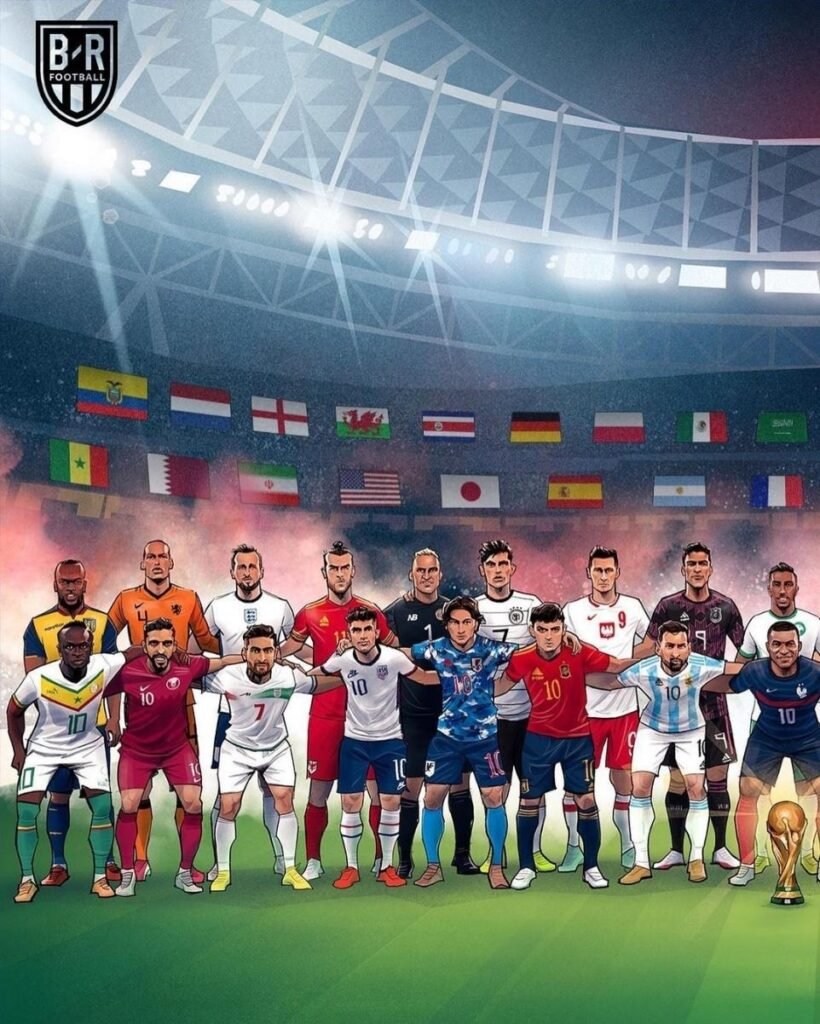
Source : Official Instagram Bleacher Report Football
The new six-team playoff is a fascinating addition. Scheduled to be held in one of the host countries in late 2025, it will feature:
- One team from AFC
- One team from CAF
- Two teams from CONCACAF
- One team from CONMEBOL
- One team from OFC
These teams will be drawn into two groups of three. They will play a single round-robin within their group, with the group winner advancing to the World Cup. This format minimizes the impact of a single bad day or a lucky draw, rewarding consistency over two or three games. The probability of any of these playoff contenders reaching the World Cup is a balanced 1-in-3, a far cry from the high-stress two-legged playoffs of the past.
Conclusion: The New Faces of World Football
The 2026 World Cup is set to be a landmark event, and the qualification process is the first act of this new drama. The expansion to 48 teams and the new slot allocation are designed to make the global game more inclusive, and they have undoubtedly succeeded.
The biggest winners in the new World Cup 2026 qualification landscape are clear:
- Mid-tier nations from large confederations like UEFA, CAF, and AFC, who now have a much wider margin for error.
- The entire continents of Africa and Asia, whose representation will more than double, giving hope to dozens of nations.
- The OFC confederation, which finally has a direct, non-contentious path to the World Cup.
While the journey will still be demanding, the probabilities have shifted. The World Cup is no longer an exclusive club for a select few; it is becoming a true global festival, and the race to be there has never been more open or more exciting.
For official information on the tournament format and qualification process, visit the FIFA World Cup 2026 section.
Related posts
 World Cup Qualifiers
Saudi Arabia World Cup 2026: The Green Falcons’ Quest for Glory
 Predictions